Showing posts with label Surgical Instruments. Show all posts

Saturday, 3 December 2011

TROCARS

      A trocar is a surgical instrument with a sharp point which is used to create a hole in the body which can be used to introduce surgical tools. Trocars are most commonly attached to tubes known as cannulas, with surgical tools being passed down the cannula, through the trocar, and into the body. Trocars are widely used in laparoscopic surgery procedures. They are also utilized by the funeral industry, during the embalming process.

Although trocars are traditionally sharp, the blade can come in a number of styles, from the classic three pointed blade on a traditional trocar to a blunt blade on a non-bladed version of the instrument. Trocars can also be shielded, with small shields which click into place to prevent damage to a patient's internal organs after the trocar has been inserted. These devices are often designed to be single use, with the trocar discarded after use in a patient.

One use for the trocar in human and animal medicine is for aspiration. If a patient has a buildup of fluid or gas, a trocar can be quickly inserted and connected to an aspiration tube to remove the buildup. This can greatly increase comfort for the patient, acting as an emergency intervention to stabilize the patient until a doctor can determine what caused the buildup and address the problem. In laparoscopic surgery and surgical procedures on the veins and arteries, trocars are used as ports, creating a point of entry for tools used during the surgery. After the surgery is finished, the device is carefully removed and small stitches are put in place.

Trocars come in a range of sizes, designed for various applications. A surgical trocar may be quite large, to allow for the introduction of surgical tools, and the surgeon can usually select from several styles and sizes to find the most appropriate tool for a procedure. Various devices can also be attached to the instrument, such as aspiration machines, ports used for the delivery of medicine, and so forth.

In the embalming process used to prepare bodies for burial, the trocar is used to gain venous access for arterial embalming. Once the embalming is complete, another trocar connected to an aspiration machine is inserted into the abdomen to drain gas and fluids. This is designed to prevent bloating of the body, as the embalming process does not halt the process of decomposition, only slowing it considerably.

Wednesday, 30 November 2011

MOUTH GAG

      A mouth gag is any kind of device used to hold the mouth open or to keep the wearer from speaking. Mouth gags can vary widely in design and can be made of anything from rubber balls to stainless steel. They are used in dentistry and surgery in order to hold a patient's mouth open. A mouth gag may also be used in adult erotic play.

A mouth gag can assist in keeping a patient's mouth open if he has been sedated for painful dental work or surgery. It can also help patients who have difficulty keeping their mouth open for other reasons. When placed in the mouth, the mouth gag keeps the teeth apart while still allowing for a surgeon or dentist to work inside.

Dental mouth gags are usually made of stainless steel so that they can be easily cleaned and sterilized. They usually consist of a thick metal wire shaped into a rough oval, which is placed inside the mouth. Some other kinds of mouth gags resemble a pair of pliers, which can be locked in an open position to hold the mouth open on one side. 

A surgical mouth gag is used to keep a patient's mouth open while they are sedated and unconscious. Some surgical mouth gags come with built-in steel tongue depressors in order to hold a patient's tongue in place. This allows for the surgeon to have easier access to the throat. Surgical mouth gags are used during operations on adenoids, tonsils, and other surgeries which require access to the throat.

Mouth gags used in erotic play have a different purpose than those used in dentistry or surgery. Instead of holding the mouth open, they are used to keep the wearer from speaking clearly. Though they seldom are made well enough to keep someone from making noise, they can provide a powerful visual in games of power exchange. 

Erotic mouth gags are often made of materials that can be bitten into without harming the wearer. To this end, they often take the form of a soft rubber ball. The ball is held in the mouth by a strap that passes around the head. In some designs, the ball can be taken off the strap for easy sterilization. 

These gags can also take the form of simple strips of tape or cloth which go over the mouth or between the teeth. To further block the mouth, a piece of cloth might be stuffed inside the mouth before putting the gag over the wearer. This kind of simple gag can usually be defeated by movements of the tongue, which can push the fabric out of the way.

Sunday, 6 November 2011

TENACULUM Forceps

      A tenaculum is a surgical instrument which is used to grasp and hold tissues. The tenaculum is a form of locking forceps, designed to hold itself in place once it has been locked, and it can be used to hold tissues steady for surgical procedures, to hold tissues out of the way, or to grasp tissues for the purpose of manipulating them. Many companies which manufacture surgical instruments produce tenaculum forceps in a variety of styles for various uses.

This surgical instrument dates to at least the 1600s, with the name for the instrument coming from a Latin root which means “to hold,” the same root involved in words like “tenacious.” The tenaculum consists of long, narrow handles attached to hooks. The hooks can be anchored in the tissue being examined, with the medical provider locking the handles once the desired position has been obtained.

One of the most common uses of the tenaculum is in procedures when it is necessary to stabilize the cervix in order to see or perform a procedure. A cervical tenaculum may be made from plastic, designed to be single use for one patient only, or from stainless steel, in which case it can be sterilized and reused. Tenaculum forceps are also used in other types of surgical procedures.

Like other surgical instruments, the tenaculum can seem slightly barbaric in action, but the patient will not feel it when it is placed as long as he or she is under general anesthesia. In cases where the patient is awake, as for certain gynecological procedures, local anesthetics may be injected so that the patient cannot feel the placement and removal of the instrument. The patient is also usually given a medication which promotes relaxation so that he or she will feel more comfortable during the procedure.

Learning to use surgical instruments appropriately takes time. During the course of surgical training, doctors learn about the different instruments available to them, the uses recommended for various instruments, and the techniques which should be used to handle them. Although patients cannot feel instruments during surgery, poor instrument choice or use can complicate matters for the patient by inadvertently causing damage to the tissues, which can increase healing time or increase the risk of infection. Surgeons also tend to develop their own instrument technique over the course of their careers, developing various tricks and methods which facilitate their work in the operating room.

Tuesday, 1 November 2011

CLAMP Forceps


     Clamp forceps are a type of tool that can hold, compress, or grasp an item while locking in place. They are also called locking forceps. For instance, clamping forceps allow a heart surgeon to clamp off an artery to prevent bleeding, while the locking mechanism keeps the forceps in place. These types of forceps are used primarily in the medical field in both veterinary and human medicine. There are many variations of sizes, materials, and designs, with some forceps engineered to perform specific functions. 

Most of these forceps are shaped like an X and use a lever principle. A hinge at or near the center of the forceps allows the user to squeeze one end to apply pressure at the opposite end. They are similar in action to ordinary scissors, except that the forceps lock in place once they are closed. The clamping, or locking, mechanism is a set of opposing serrated tabs located between the openings for the thumb and forefinger. When the clamp forceps are squeezed, the serrated tabs come into contact with each other and hold the forceps at that pressure; with another slight squeeze, the user breaks the contact, and the forceps open.

The simple locking mechanism, unlike spring clamps, allows for various clamping pressures. A light squeezing pressure can compress delicate tissues without damaging them. Stronger squeezing pressure can be used to compress surgical tubing or hold a tooth during extraction. This variable pressure feature and the ease with which they are placed, locked, and released make clamp forceps one of the most commonly used surgical instruments.

Forceps that are used to clamp off blood vessels are called hemostats. Many forceps are named for the surgeon who designed them. Surgeons sometimes develop these tools to use on specific tissues or during a particular type of procedure. Doctors use Allis forceps to hold intestinal tissue, while Carmalt forceps clamp ovarian pedicals. Adson forceps have long, tapered ends, allowing them to handle delicate tissue.

Several different materials are used to fabricate forceps. Those that are to be used once and then disposed of are made of plastic. Others are made of stainless steel or carbon steel, metals that will survive repeated sterilization. A number of specialty clamp forceps are made of titanian, a durable and lightweight metal. Depending on the use, the grasping end of the forceps may be rubber coated, angled, or grooved.

Sunday, 30 October 2011

SUCTION Tubes

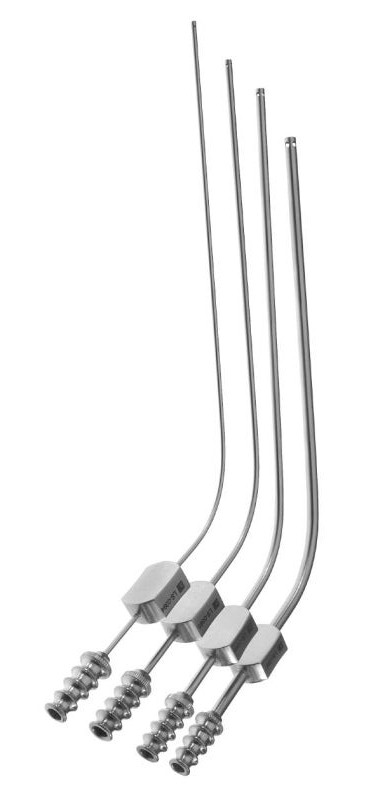
A suction tube is a medical device which provides suction by being attached to a suction machine. Suction can be used to clear liquids and slurries away from an area of concern, and it is utilized in many different aspects of medical care. Suction devices are commonly found on ambulances, in hospital rooms, in emergency rooms, and in clinics, with attachable tubing and tips for various applications. Like other medical devices, the suction machine is designed with replaceable tubing and tips which can be changed between patients to limit the spread of disease.

One classic use of suction is in dentistry. While dental work is being performed, someone's mouth can fill with blood and saliva. This poses a risk to the patient, as it may occlude the airway, and it also makes it hard for the dentist to see and work. The suction tube is used to periodically clear the mouth, essentially vacuuming up the excess liquid to clear the area. It can be used by the dentist or by an assistant who provides suction by request or when needed.

n surgery, suction tubes are also used to clear the surgical field. Blood can fill the field, making it difficult for the surgeon to see and complicating the field. Other fluids like mucus and pus can also impede clear vision of the surgical site. In liposuction procedures, a specialized suction tube is used to pull fat cells out of the body, and the suction tube is also used in neurosurgery, where it removes excess liquid and relieves pressure on the skull.

Suction can also be used in the care of patients who are spending time in the hospital for respiratory conditions. Many of these patients require airway suctioning to remove mucus. The suction tube will increase patient comfort, reduce the risk of complications such as pneumonia, and keep the lungs clear so that the patient can breathe. Suctioning is also used when a patient is near death to reduce the sound of the distinctive “death rattle,” as this sound can be disconcerting for family members.

The tips on a suction tube can be changed for different applications. Bent and straight tips are available, along with tips of various widths and designs. Some are made from metal, designed for sterilization and reuse, while others are made from plastics, in which case they are disposable and discarded after use so that organisms are not passed between patients.